
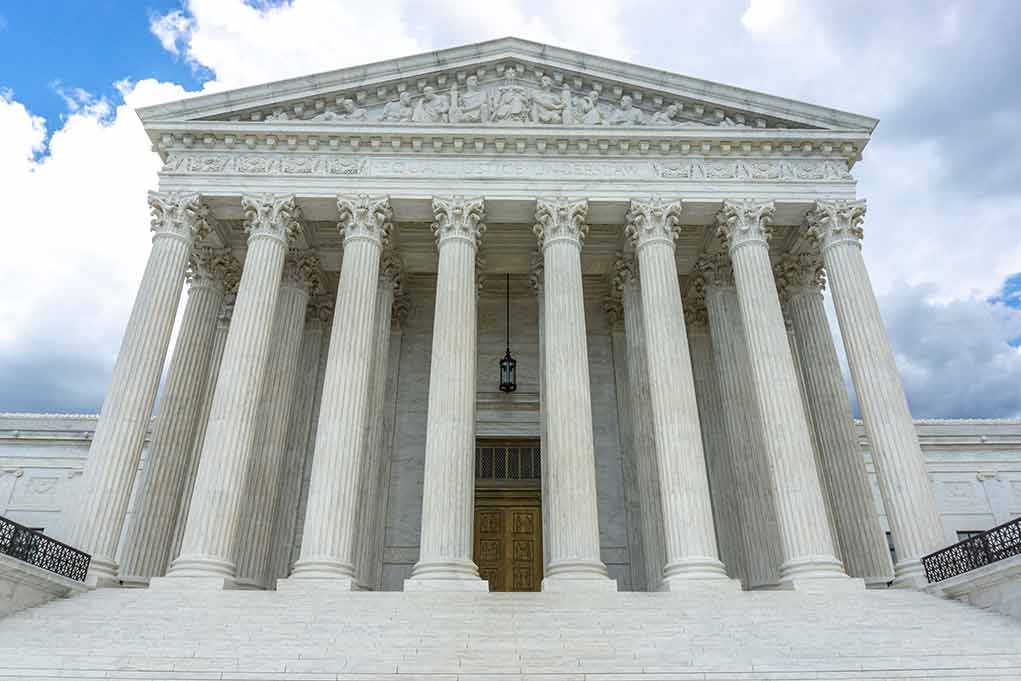

(RepublicanNews.org) – In the Supreme Court’s final two-week session of the year, several significant financial and administrative law disputes are scheduled for review.
On December 5th, a case will be examined to determine the legality of a tax enacted under former president Donald Trump as part of the sweeping tax reforms in 2017. The ruling could have a broader impact on taxation, including a federal wealth tax.
The tax in question levied a one-time tax on Americans who owned shares in foreign companies based on the corporation’s earnings over the past three decades, even if the earnings were not distributed to the taxpayer.
Charles and Kathleen Moore are asserting that they should receive a refund of about $15,000 in taxes they were required to pay due to their investment in an Indian supplier. Both argue that the tax is unconstitutional because they never received any income from the company for their investment.
Prior to Moore v. United States, the Supreme Court will rule on the bankruptcy of Purdue Pharma, the maker of the prescription painkiller OxyContin, which faced numerous lawsuits in 2019 related to the opioid crisis.
The wealthy Sackler family was poised to contribute up to $6 billion to the settlement and, in exchange, would have been absolved from civil liability. However, despite 95% of creditors supporting the plan, a component of the Justice Department known as the U.S. Trustee Program is objecting in the Supreme Court.
The Justice Department and a lone supporter argue that unanimous consent from all creditors is necessary. Harrington v. Purdue Pharma L.P could have potential repercussions for other major corporate bankruptcies.
To conclude November, the Biden administration will defend the Securities and Exchange Commission, which is being challenged over its constitutionality by George Jarkesy. In a complex bureaucratic case, Jarkesy has accused the SEC of violating his constitutional rights after being found to have violated federal securities laws.
Jarkesy contends that not only has his Seventh Amendment right to a jury trial been violated, but also Congress incorrectly delegated legislative power. This is due to his assertion that the body gave the SEC authority to impose civil penalties. Furthermore, he argues that the double for-cause removal protections for SEC administrative law judges are not constitutional.
Copyright 2023, RepublicanNews.org
Leave a Comment