
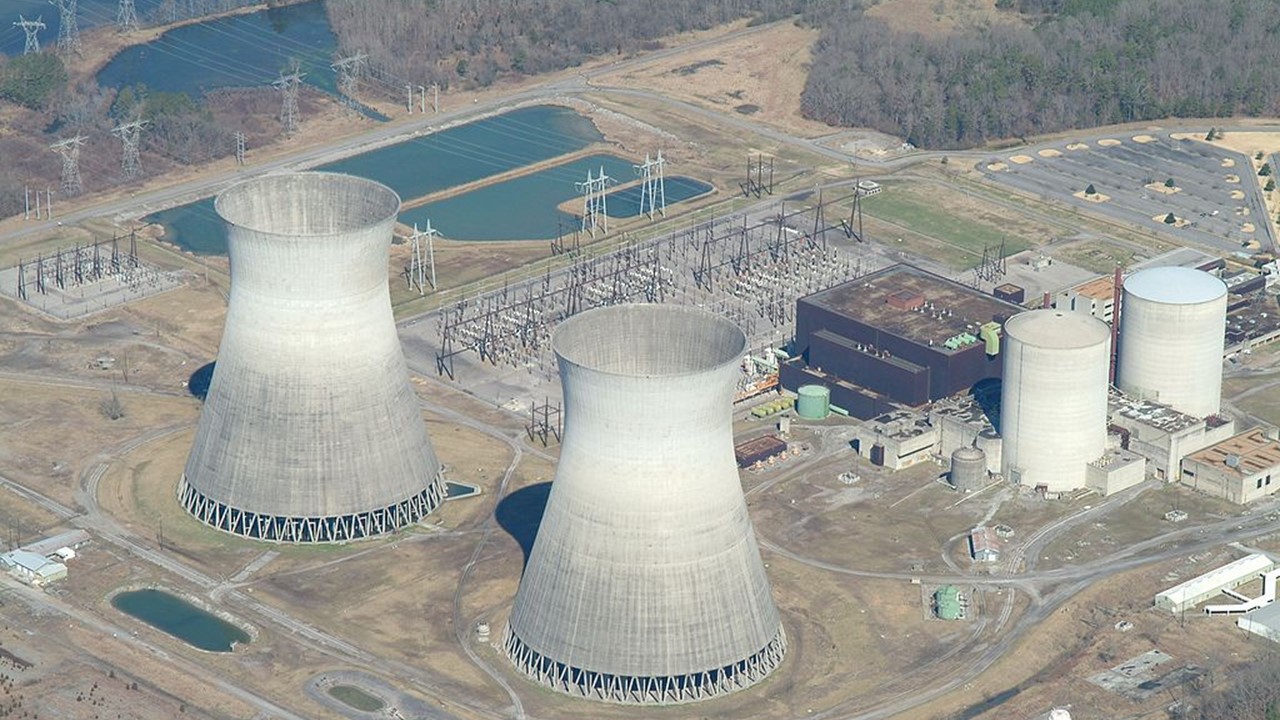

“In December 2022, after more than ten years of effort and disappointment, researchers at the US National Ignition Facility (NIF) reported that they had accomplished a breakthrough by initiating a fusion reaction that produced more energy than it consumed — a process called ignition. They have now verified this achievement by replicating it multiple times,” according to Nature.
The NIF was not intended as a power plant, but as a facility to replicate and analyze the reactions that happen during thermonuclear detonations after the United States stopped underground weapons testing in 1992. The higher fusion yields are currently contributing to advancements in nuclear-weapons research and have also sparked enthusiasm about fusion as an infinite source of clean energy. US special presidential envoy for climate John Kerry urged for new international partnerships to advance fusion energy at the COP28 climate summit in Dubai last week, and the US Department of Energy (DOE), which supervises the NIF, announced the establishment of new research hubs, to be headed by the LLNL, the University of Rochester in New York and Colorado State University in Fort Collins.
Constructing the NIF was “a leap of faith” for many, and its success has had a real impact on the fusion community, and on public perception, says Saskia Mordijck, a physicist at William & Mary, a university in Willamsburg, Virginia. “In that sense, what is important is that scientists said they could do something, and then they actually did do something.”
The NIF operates by directing 192 laser beams at a frozen pellet of the hydrogen isotopes deuterium and tritium within a diamond capsule suspended inside a gold cylinder. The resulting implosion causes the isotopes to fuse, producing helium and substantial amounts of energy. On 5 December 2022, those fusion reactions for the first time generated more energy — approximately 54% more — than the laser beams supplied to the target.
The facility accomplished a new record on 30 July when its beams supplied the same amount of energy to the target — 2.05 megajoules — but, this time, the implosion generated 3.88 megajoules of fusion energy, an 89% increase over the input energy. Researchers at the laboratory achieved ignition during two additional attempts in October. And the laboratory’s calculations suggest that two others in June and September produced slightly more energy than the lasers provided, but not enough to confirm ignition….While this represents notable progress, providing fusion energy to the power grid is still a significant challenge, and the NIF, despite having the world’s largest laser, is not well-suited for that purpose. The facility’s laser system is highly inefficient, and over 99% of the energy used in a single ignition attempt is lost before it can reach the target.
To achieve this, researchers will require more efficient laser systems that will need to be developed in collaborations between laboratories and partners in the nuclear industry. Until now, most funding for fusion-energy research has concentrated on devices known as tokamaks, which utilize magnetic fields inside a doughnut-shaped ‘torus’ to capture and confine the energy generated by fusion reactions. This is the objective at ITER, a consortium constructing the world’s largest fusion facility near Saint-Paul-lez-Durance, France. Tokamaks have also been pivotal to numerous fusion projects in the private sector, but more than 50 companies are working on alternative methods, such as laser fusion.
Would progressive activists oppose fusion-based nuclear power the way they do existing fission-based nuclear power plants? Fusion “does not create any long-lived radioactive nuclear waste. A fusion reactor produces helium, which is an inert gas. It also produces and consumes tritium within the plant in a closed circuit,” observes the International Atomic Energy Agency. “Fusion is among the most environmentally friendly sources of energy. There are no CO2 or other harmful atmospheric emissions from the fusion process, which means that fusion does not contribute to greenhouse gas emissions or global warming.”
Fusion would be better for the environment, but there might still be skepticism about the technology. After all, existing fission-based nuclear power, while not as environmentally friendly as fusion, is still more beneficial for the environment than other options. A recent study indicated that nuclear power is the most favorable for the environment. However, environmental activists in countries like Germany have compelled the closure of nuclear power plants. They have done so even though “every major study, including a recent one by the British medical journal Lancet, finds the same thing: nuclear is the safest way to produce reliable electricity,” stated a long-time environmental activist. “Solar panels require 17 times more materials in the form of cement, glass, concrete, and steel than do nuclear plants, and generate over 200 times more waste,” such as “dust from toxic heavy metals including lead, cadmium, and chromium.” Unlike wind farms, nuclear power plants don’t harm birds. And “unbelievably, wind turbines cause more fatalities than nuclear plants.” “Nuclear power is the safest form of energy we have, if you consider deaths per megawatt of energy produced,” explained Yale University professor Steven Novella.
Scientists are also making progress in other technological areas. Scientists have created small robots composed of human cells to repair damaged cells. Nanorobots are also being utilized in the fight against cancer. “In a significant advancement in nanomedicine, Arizona State University scientists…have effectively programmed nanorobots to shrink tumors by cutting off their blood supply,” reported Next Big Future.
Recently, doctors utilized a surgical robot to conduct extremely intricate spinal surgery, and used a robot to perform a liver transplant. Robots can access small areas within a person’s body that a surgeon cannot reach without penetrating living tissue.
Leave a Comment