
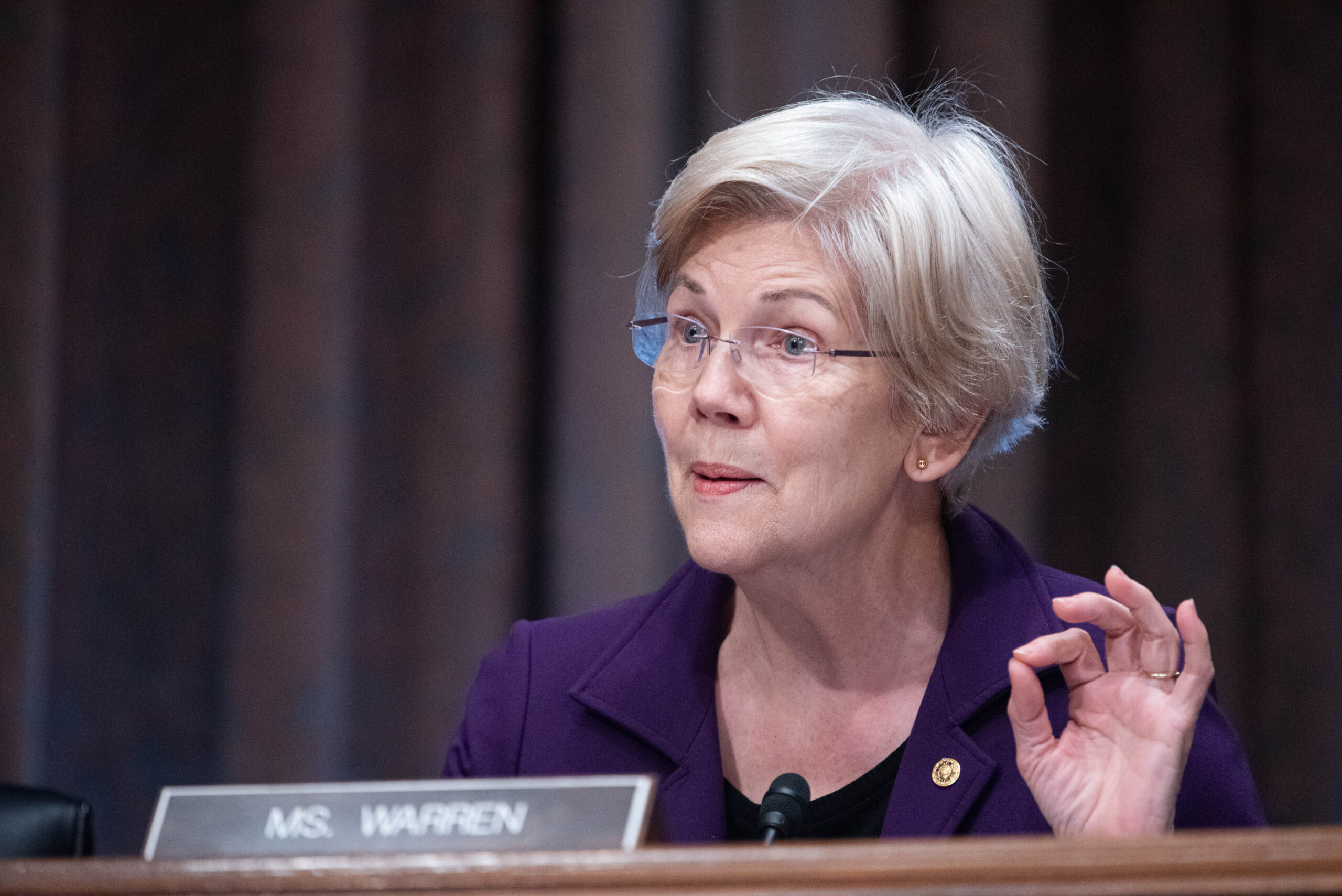

Subway might not be the only one that’s freshly baked. Senator Elizabeth Warren (D–Mass.) believes the government should examine America’s supposed “sandwich shop monopoly.”
“We don’t need another private equity deal that could lead to higher food prices for consumers,” Warren tweeted Sunday. She was responding to a Politico piece reporting that the Federal Trade Commission (FTC) is investigating the private equity firm Roark Capital’s $10 billion acquisition of Subway.
We don’t need another private equity deal that could lead to higher food prices for consumers. The @FTC is right to investigate whether the purchase of @SUBWAY by the same firm that owns @jimmyjohns and @McAlistersDeli creates a sandwich shop monopoly. https://t.co/mAFuuFYA5A
— Elizabeth Warren (@SenWarren) November 26, 2023
Roark already owns the sandwich-serving chains Arby’s, Jimmy Johns, McAlister’s Deli, and Schlotzky’s. Warren said that adding Subway to that list could create a “sandwich shop monopoly.”
The senator has made a career of fighting against such “monopolies,” regardless of how monopolistic they actually are or beneficial to consumers they might be. (Witness her conflict with Amazon-branded chargers.)
Her assault on America’s supposed “sandwich shop monopoly” portrays new points for pettiness. It also demonstrates how broad (and therefore insignificant) the word “monopoly” has become in modern political discussions—and at Lina Kahn’s FTC.
It’s easy to claim that something is a monopoly if you narrow your focus on the market or product being discussed. There are, after all, only so many national fast-casual restaurant chains focused on serving deli sandwiches. If Roark snatches up Subway, then ownership of that particular ham slice of the market may indeed appear consolidated.
But from the average consumer’s perspective, competition remains strong. There are endless options for getting a sandwich without paying a Roark-owned enterprise. Grocery stores, convenience stores, coffee shops, non-chain delis, and more all sell some variety of sandwich. And yes, non-Roark-owned national sandwich chains still exist.
Sandwiches, not being the most elaborate meal in the world, can also be made by most Americans at home.
In addition to the robust competition within the sandwich market, sandwich shops contend with various other restaurants selling hamburgers (technically also a sandwich), hot dogs (arguably a sandwich), burritos (not a sandwich), salads, soups, Asian rice bowls, Mediterranean rice bowls, and more.
Consumers can, and do, move between all of these options easily. Even if Roark’s acquisition of Subway gives it a tight grip over the sandwich market, its ability to raise prices on consumers will still be limited by this overwhelming array of additional lunchtime options.
The original purpose of antitrust laws was to prevent the big players in the economy from using their ownership to raise prices and overcharge consumers. Critics have long criticized such laws, arguing that an existing monopoly can’t sustainably charge consumers above-market prices as long as new competitors armed with new technologies are allowed to undercut them. And indeed, even tech companies that once seemed invincible are now being overtaken by competitive pressures.
If markets can function in that area, we surely don’t need the government to regulate who owns businesses that specialize in putting cold cuts between slices of bread.
Leave a Comment