
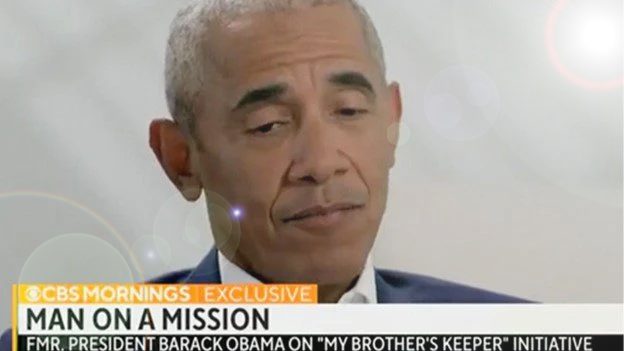

Former President Barack Obama faced criticism from Americans after he disclosed in an interview what troubles him at night and advocated for gun confiscation.
Obama was interviewed by CBS News host Nate Burleson, a former NFL player.
Burleson began by inquiring about what should be done regarding gun violence in America. Obama talked about engaging with advocates of firearm confiscation and reaching out to communities where gun ownership is a significant tradition.
Part of that work has to be done not just in those communities that already want to do something about gun violence, we have to also actively reach out to communities where gun ownership is an important tradition.
Burleson responded by expressing concern about the prevalence of guns in certain communities. Obama agreed and emphasized the need to address the availability of military-grade weapons on the streets.
The conversation took a more serious turn when Burleson asked Obama about his approach to addressing gun issues in America.
Obama stated:
In Australia, there was a single mass shooting 50 years ago, and they decided not to allow it anymore. That’s typically how a society would respond when the safety of its children is at stake.
Then Obama shared his concerns in a video interview:
CBS's Nate Burleson: "Post-presidency, what…keeps you up at night?"
Barack Obama: "The thing…I'm most worried about is…a divided conversation in part b/c we have a divided media…When I was growing up, you had three TV stations…We almost occupy different realities." pic.twitter.com/KrNWHjSgap
— Curtis Houck (@CurtisHouck) May 16, 2023
Following a mass shooting in 1996, Australia confiscated 650,000 firearms from law-abiding owners. Obama wants lawmakers to take decisive action similar to this, overriding the Constitution, in America.
Later, Burleson asked the former president about the issues that concern him the most. Obama’s response was criticized as illogical.
Burleson: Post-presidency, what keeps you up at night?
Obama: The thing that I’m most worried about is the degree to which we’ve now had a divided conversation, in part because we have a divided media. When I was coming up, you had three TV stations. And people were getting a similar sense of what is true and what isn’t, what was real and what was not.
Today, what I’m most concerned about is the fact that because of the splintering of the media, we almost occupy different realities. Now, people will say, ‘Well, that didn’t happen, or I don’t believe that.
Leave a Comment