
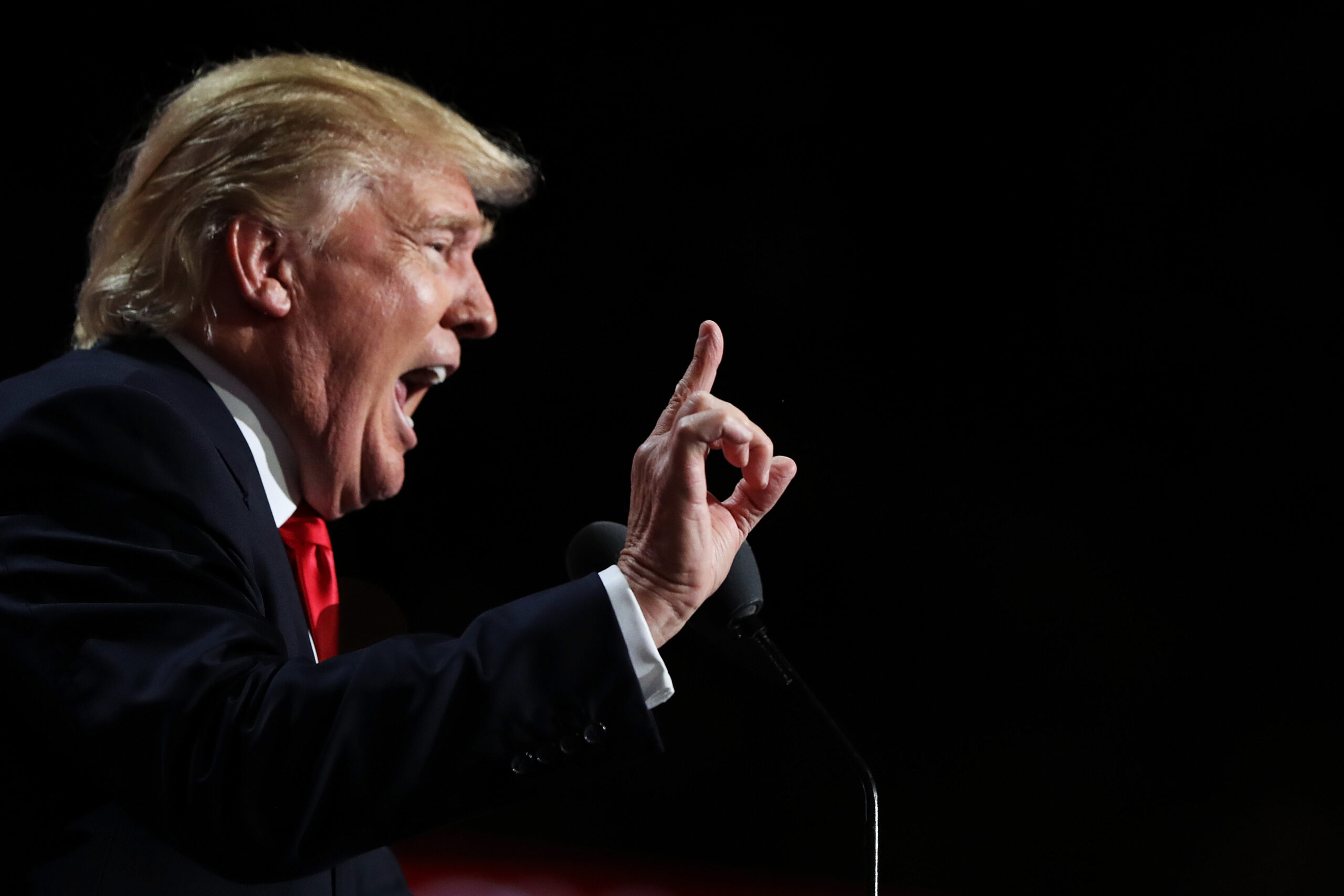

In a unanimous decision, the D.C. Circuit Court of Appeals portrayed Donald Trump as a “significant and imminent threat” to the proceedings of his Jan. 6 trial yet kept the prominent GOP frontrunner mostly silenced.
The appeals court strongly criticized Trump for his continual pattern of intimidating witnesses. Despite partially overturning U.S. District Judge Tanya Chutkan’s decision, the court praised her management of the case and highlighted the significant challenge she faces. It also positioned its ruling as a stance against Trump’s attempt for special treatment as he pursues a return to the presidency, calling it an attack on the rule of law.
Circuit judge Patricia Millett expressed the court’s cautious approach, stating, “We do not allow such an order lightly…Mr. Trump is a former President and current candidate for the presidency, and there is a strong public interest in what he has to say. But Mr. Trump is also an indicted criminal defendant, and he must stand trial in a courtroom under the same procedures that govern all other criminal defendants. That is what the rule of law means.”
The appeals court upheld most of the original gag order, which prohibits Trump from discussing witnesses and their involvement in the case. However, it slightly adjusted the order to allow Trump to speak about Special Counsel Jack Smith. Additionally, comments on attorneys in the case are only banned if they are intended to significantly interfere with their work or are highly likely to cause such interference.
Throughout the ruling, the appeals court demonstrated a profound understanding of Trump’s behavior towards witnesses, judges, prosecutors, and adversaries in legal proceedings over the past few years. The court recounted instances where individuals faced severe repercussions after being targeted by Trump’s verbal attacks, including two Georgia election workers smeared by Trump and Rudy Giuliani, leading to extensive harassment and threats.
The court also pointed out how Trump’s attempts to “denigrate and attack” those involved in the case had influenced Judge Chutkan. It referenced an incident where Trump insulted Chutkan and a subsequent threatening call made to the judge’s chambers by one of his supporters.
The court emphasized Trump’s awareness of the impact of his words on his audience, noting his acknowledgment that his supporters “listen to [him] like no one else.” Trump’s argument that his commentary on the trial is protected political speech due to his presidential campaign was rejected by the appeals court, which stressed the fair administration of justice as paramount, irrespective of political campaigns.
The court acknowledged Trump’s status as a national politician but highlighted the potential of the gag order to undermine him as a candidate. It noted scenarios where Trump’s opponents could exploit the indictment and evidence against him, hampering his ability to respond and unfairly influencing the political debate. However, it also commended Judge Chutkan for her efforts in tailoring the order within the bounds of the First Amendment.
The appeals court determined that a substantial part of Judge Chutkan’s gag order was unconstitutional. Nevertheless, it upheld most of the order, affirming that Trump knowingly disregarded its limitations.
Leave a Comment