
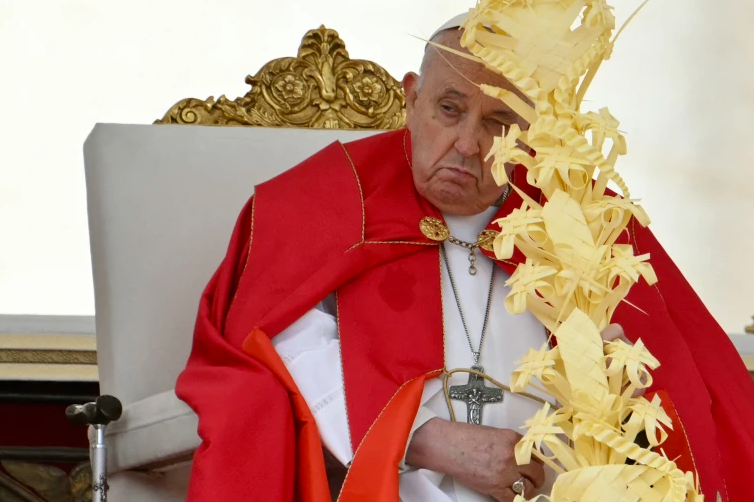

In a striking deviation from tradition, the Palm Sunday Mass at St. Peter’s Square witnessed an unexpected turn of events as Pope Francis, the 87-year-old leader of the Catholic Church, opted out of delivering his customary homily. This alteration in the day’s proceedings underscores a concerning trend within the Vatican, reflecting broader issues of leadership and health that cannot be ignored.
Pope Francis, who has been visibly struggling with significant health challenges including knee problems and respiratory issues, also refrained from participating in the traditional procession around the obelisk with the cardinals. This procession marks the commencement of Holy Week, leading up to Easter Sunday—a period of paramount importance in the Christian faith. Despite these changes, approximately 25,000 attendees were present for the service.
The faithful gathered were still part of a significant moment as Pope Francis blessed palm fronds and olive branches from the altar. This act commemorates Jesus Christ’s triumphant entry into Jerusalem—an event celebrated worldwide on Palm Sunday. However, this year’s observance was marred by Pope Francis’ evident health struggles and his decision to bypass key elements of the ritual.
It is becoming increasingly clear that Pope Francis’ frail health significantly influenced these alterations to a centuries-old tradition. The pontiff has battled persistent respiratory ailments over recent months, including flu and bronchitis episodes that have raised serious concerns about his capacity to fulfill his papal duties.
The “unexpected change in schedule” not only casts a shadow over Pope Francis’ well-being but also ignites speculation regarding his ability to maintain an active role in leading the Catholic Church. Some observers are questioning whether these developments signal a decline in his health and what this could mean for the future leadership of over a billion Catholics worldwide.
Moreover, Pope Francis’ decision to forego delivering his homily has sparked intense debate about succession and what lies ahead for the Catholic Church amidst such uncertainty. There is growing speculation that these recent adjustments may be part of a broader strategy by Pope Francis to gradually delegate responsibilities in preparation for an eventual transition.
Despite these challenges, Pope Francis is slated to lead several critical events during Holy Week. His agenda includes visiting a women’s prison in Rome for a foot-washing ceremony on Thursday—a profound act of humility—followed by participating in the Way of the Cross procession at the Colosseum on Friday. The week will culminate with Easter Vigil and Mass services.
As Christians around the globe enter into Holy Week—the most sacred time on their religious calendar—many hold Pope Francis in their prayers. His perseverance in fulfilling his papal obligations despite facing significant health issues speaks volumes about his dedication and faith.
Pope Francis continues to be an influential figure worldwide through his actions and teachings. Yet, as we witness these developments unfold within Vatican City, it prompts critical reflection on leadership resilience and succession planning within one of Christianity’s oldest institutions.
Leave a Comment