
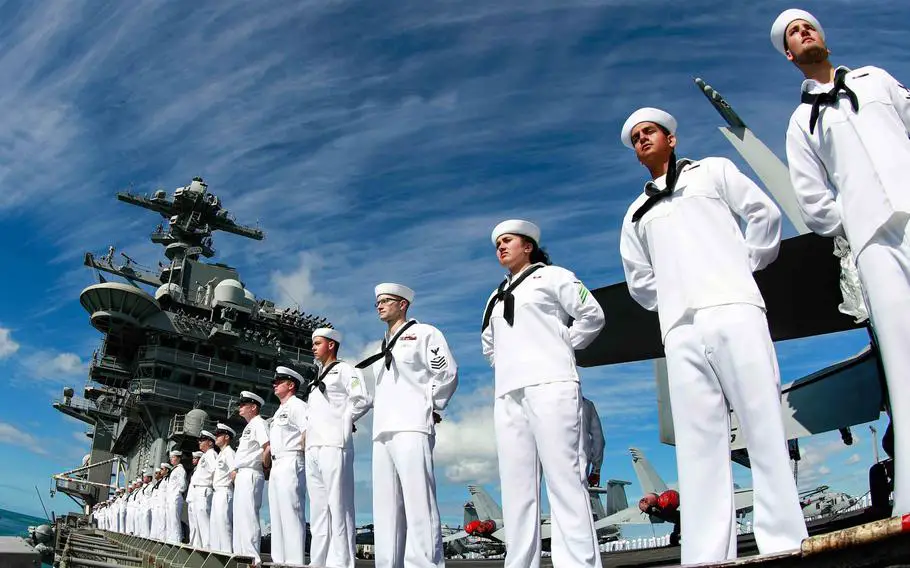

After falling short on their recruitment goals for the fourth year in a row, the US Navy is taking drastic measures to fill their ranks. In October 2020, it was announced that all recruitment goals for the enlisted and reserve ranks had been missed by a significant margin. This has forced the Navy to lower its standards for new recruits in an effort to reach its goals for the upcoming fiscal year. While these changes may help in the short term, they raise concerns about the quality of the future force.
The Navy has announced that they will no longer require high school diplomas or GEDs for enlistment. This is a major change from the previous requirement of at least a high school education. The only condition now is that they must pass the Armed Services Qualification Test, with a minimum score of 50 out of 99. This is a significant decrease from previous years when recruits were required to score much higher. The last time the Navy accepted recruits without educational credentials was in 2000.
This is not the first time the Navy has lowered its standards in order to reach recruitment goals. In 2020, they also lowered the physical fitness requirements for new recruits. This included weight limits and stamina requirements. However, these changes can have long-term implications for the readiness of the Navy. In times of global uncertainty, it is crucial for the military to have a well-educated and physically fit force.
These changes in recruitment standards raise concerns about the type of force the Navy will have in the future. With the world currently in turmoil and the navy facing challenges in the Red Sea and other possible conflicts, it is important to have well-educated and physically capable sailors serving in the armed forces. Basic, manual labor tasks may not require high levels of education or physical fitness, but for positions dealing with weapons control and communications, the Navy’s technical schools are as demanding as many college courses.
Throughout history, joining the military has been viewed as a prestigious and honorable career path. However, with these recent changes, the perception of the military may be shifting. Not only are they struggling to meet recruitment goals, but lowering standards also sends a message to our adversaries that our troops are not competent or prepared. This is especially concerning with a Commander-in-Chief who is not currently respected or feared on the global stage.
The decision to lower standards also raises questions about the future of the Navy. Will this be a temporary fix or a permanent solution? Will these changes lead to a decrease in the quality of the military and put our troops at risk? Only time will tell the true impact of these decisions. However, it is important for the Navy to address the root cause of the recruitment issues and find ways to attract highly qualified candidates to serve their country.
Many experts believe that the root cause of the Navy’s recruitment issues lies in the societal shift towards valuing higher education and the decrease in physical fitness among young adults. As more and more young people pursue college degrees, the pool of potential recruits diminishes. At the same time, the average American is also becoming less physically fit, making it more difficult for the Navy to find recruits who meet their physical fitness standards.
In order to address these issues, the Navy must find ways to appeal to the younger demographic while also emphasizing the importance of physical fitness and education. This could include offering more incentives such as tuition assistance and training programs. Additionally, the Navy should focus on improving its reputation and image in the public eye, highlighting the pride and honor of serving in the armed forces.
Leave a Comment