
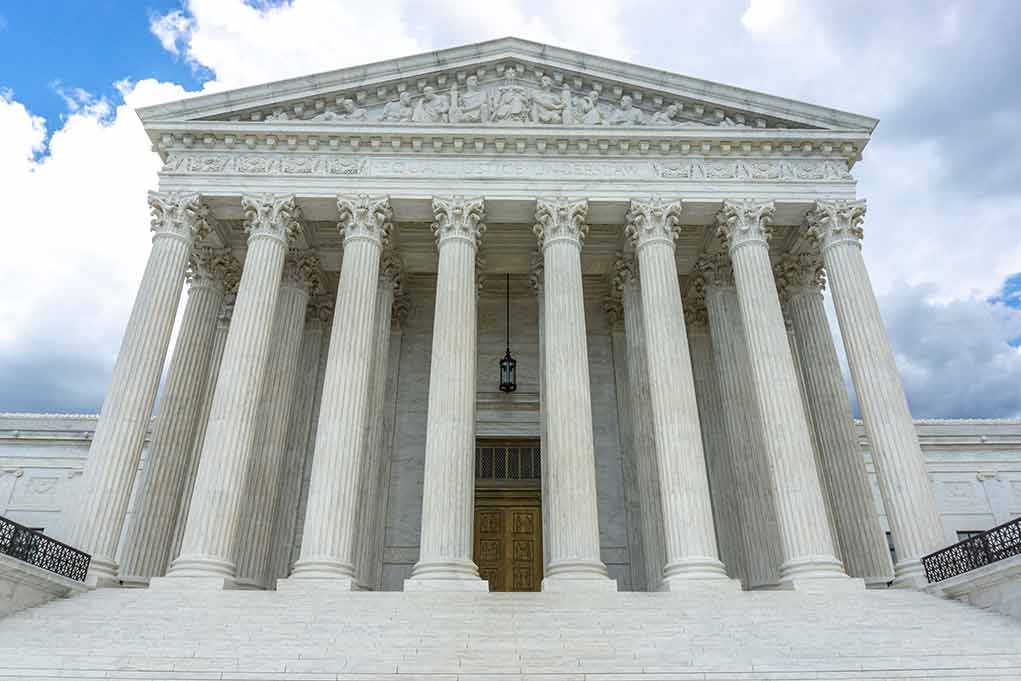

Supreme Court Justice Clarence Thomas’ long-standing friendship with property mogul Harlan Crow and Samuel Alito’s extravagant travels with billionaire Paul Singer have raised concerns about influence and ethics at the nation’s highest court.
In early January 2000, Supreme Court Justice Clarence Thomas was at a luxury beach resort in Sea Island, Georgia, deeply in debt.
After almost ten years on the court, Thomas had grown frustrated with his financial situation, according to friends. He had recently taken on the care of his young grandnephew, and Thomas’ wife was seeking advice on managing the new expenses. The previous month, the justice had borrowed $267,000 from a friend to buy a high-end RV.
During the resort visit, Thomas spoke at an off-the-record conservative conference. On his return flight, he conversed with a Republican member of Congress who left concerned that Thomas might step down.
Congress should raise the salaries of Supreme Court justices, Thomas told him. If lawmakers didn’t act, “one or more justices will leave soon” — possibly within the next year.
At the time, Thomas’ salary was $173,600, equivalent to over $300,000 today. However, he was one of the least wealthy members of the court and, on multiple occasions at the time, he sought ways to increase his income. In private discussions, Thomas frequently discussed lifting a ban on justices delivering paid speeches.
Records from the time obtained by ProPublica described Thomas’ efforts, including a private memo to Chief Justice William Rehnquist from a senior judiciary official seeking guidance on what was termed a “sensitive issue.”
The documents, along with interviews, shed light on how Thomas discussed his finances during a critical period in his tenure, just as he was forming relationships with a group of affluent supporters.
Congress never lifted the ban on speaking fees or provided the justices with a significant raise. However, as ProPublica has reported, Thomas accepted a series of presents from friends and acquaintances, which seems unmatched in modern Supreme Court history. Some gifts helped with various expenses — private school fees, vehicle maintenance. Other gifts from a group of extremely wealthy men enhanced his lifestyle, such as complimentary international trips on a private jet and luxury yacht courtesy of Dallas real estate magnate Harlan Crow.
The exact reason so many people offered Thomas money and other gifts remains unclear. There is no evidence that the justice ever discussed resigning with Crow or his other affluent supporters.
George Priest, a professor at Yale Law School who has vacationed with Thomas and Crow, told ProPublica he believes that Crow’s generosity was not aimed at influencing Thomas’ opinions but rather at making his life more comfortable. “He sees Thomas as a Supreme Court justice with a limited salary,” Priest said. “So he provides him with benefits.”
Thomas and Crow did not respond to queries for this story. Crow, a prominent Republican contributor, has not had cases at the Supreme Court since Thomas joined it and has previously stated that Thomas is a close friend. David Sokol, a conservative financier who has taken Thomas on vacation on a private jet, said in a statement that he and Thomas never discussed the justice’s finances or retirement plans.
Thomas’ remarks in 2000 were directed to Florida Rep. Cliff Stearns, a vocal conservative who had been in Congress for 11 years and occasionally socialized with the justice. They sparked a flurry of activity across the judiciary and Capitol Hill. “His importance as a conservative was paramount,” Stearns said in a recent interview. “We wanted to ensure he felt secure in his position and was being fairly compensated.”
Most crucial federal government roles suffer from a widely criticized dilemma: They pay significantly less than equivalent private sector positions, but officials can cash in once they leave. Former regulators offer advice to those they used to regulate. Retired military officers join defense contractors. Former senators take on lobbying roles in Congress.
However, there is no lucrative position awaiting Supreme Court justices after a lifetime appointment. Justices typically remain on the bench past their 80th birthday, if not until death. In 2000, justices were paid more than cabinet secretaries or members of Congress, and considerably more than the average American. Nonetheless, judges’ salaries were not keeping up with inflation, sparking frustration throughout the federal judiciary. Young associates at top law firms earned more than Supreme Court justices, while firm partners could rake in millions annually.
Some of Thomas’ colleagues were extremely wealthy — Justice Ruth Bader Ginsburg was married to a well-paid tax attorney and Justice Stephen Breyer to the daughter of a wealthy British noble. Thomas did not come from wealth. When he was appointed to the court in 1991, he was 43 years old and had spent almost his entire adult life working for the government. At the time, he still had student loans from law school, Thomas has said.
The comprehensive details of Thomas’ finances over the years remain unclear. He made at least two significant purchases in the early ’90s: a Corvette and a house in the Virginia suburbs on 5 acres of land. When Thomas and his wife, Ginni, bought the home for $522,000 a year after he joined the court, they borrowed all but $8,000, less than 2% of the purchase price, property records indicate.
Public records indicate a level of financial strain. Throughout the first decade of his tenure, the couple frequently borrowed more money, including a $100,000 credit line on their house and a consumer loan of up to $50,000. Around January 1998, Thomas’ life changed when he took in his 6-year-old grandnephew, becoming his legal guardian and raising him as a son. The Thomases enrolled the child in a series of private schools.
In early January 2000, Thomas took the trip to the Georgia beach resort. Thomas was there to deliver a keynote speech at Awakening, a “conservative thought weekend” featuring golf, shooting lessons, and aromatherapy, alongside panel discussions with businessmen and elected officials. (Ernest Taylor, a founder and organizer of the annual event, told ProPublica that Thomas’ trip was covered by the organization. Thomas reported 11 complimentary trips that year on his annual financial disclosure, mainly to colleges and universities,
However, he didn’t reveal his presence at the conservative conference, which seems to break federal disclosure law.

On a commercial flight back from the Awakening conference, Thomas raised the possibility of justices stepping down to Stearns, the Republican lawmaker. Concerned, Stearns wrote a letter to Thomas afterward pledging “to explore a bill to increase the salaries of members of The Supreme Court.”
“As we concurred, it is valuable to Americans to have the constitution accurately interpreted,” Stearns wrote. “We need appropriate incentives here, as well.”
Shortly after, Stearns’ office asked for help from a lobbying firm dealing with the issue, and he made a speech on the House floor about judges’ salaries being diminished by inflation. Thomas’ warning about resignations was conveyed at a meeting of the heads of various judges’ associations. L. Ralph Mecham, the judiciary’s top administrative official at that time, sent a memo to Rehnquist, his superior, outlining Thomas’ concerns.
“I understand that Justice Thomas clearly informed him that in his opinion departures would happen within the next year or so,” Mecham wrote about Thomas’ discussion with Stearns. Mecham was anxious that “from a tactical point of view,” Democratic members of Congress might oppose a raise if they sensed “the apparent purpose is to keep Justices [Antonin] Scalia and Thomas on the Court.” (Scalia had nine children and was also one of the less wealthy justices. Scalia, Mecham, and Rehnquist have since passed away.)
It’s uncertain whether Rehnquist ever responded. Several months later, Rehnquist centered his yearly year-end report on what he termed “the most urgent issue facing the Judiciary: the necessity to raise judicial salaries.”
People with close ties to Thomas informed ProPublica they found it unlikely that the justice would retire early and that he might have exaggerated his concerns to bolster the argument for a raise. However, around 2000, rumors circulated within conservative legal circles and on Capitol Hill that Thomas was discontented about money, according to interviews with well-known attorneys, former members of Congress, and Thomas’ acquaintances. “It was clear he was displeased with his financial situation and his salary,” one friend stated.
Former Sen. Trent Lott, who was then the Republican Senate majority leader, remembered in a recent interview that there were serious worries at that time that Thomas or other justices would depart.
The public received almost no indication that such discussions about Thomas were happening in Washington. Thomas only hinted at government salaries in a 2001 speech praising the value of public service. “The job is not worth doing for what they pay. It’s not worth doing for the grief,” he said. “But it is worth doing for the principle.”
Around the same time, Thomas was also advocating for justices to deliver paid speeches — a source of income that had been prohibited in the 1980s. On multiple occasions, Thomas talked about lifting the ban with appellate Judge David Hansen, who chaired the judiciary’s committee responsible for lobbying Congress on issues like pay, according to Mecham’s memo.
At the request of Sen. Mitch McConnell, a provision lifting the ban for judges was quietly inserted into a spending bill in mid-2000. The reasoning behind McConnell’s proposal came under scrutiny in the legal press. After the Legal Times reported that the measure had been called the “Keep Scalia on the Court” bill, Scalia responded that the “honorarium ban makes no difference to me” and refuted that he would ever leave the court for financial reasons. (The ban was never lifted. McConnell did not respond to a request for comment.)
During his second decade on the court, Thomas’ financial situation seems to have significantly improved. In 2003, he received the initial payments of a $1.5 million advance for his memoir, a sum that broke records for justices at the time. Ginni Thomas, who had previously worked as a congressional staffer, was by then earning a six-figure salary at the Heritage Foundation.
Thomas also received numerous lavish gifts during the 2000s, sometimes from people he had recently met. Thomas met Earl Dixon, the owner of a Florida pest control company, while getting his RV serviced outside Tampa in 2001, according to the Thomas biography “Supreme Discomfort.” The following year, Dixon gave Thomas $5,000 to contribute to his grandnephew’s tuition. Thomas reported the payment in his yearly disclosure filing.
Bigger gifts went unreported. Crow covered two years of private high school, which estimates suggest would have cost around $100,000. In 2008, another affluent friend pardoned “a significant amount, or even all” of the principal on the loan Thomas had used to purchase the quarter-million dollar RV, according to a recent Senate inquiry prompted by The New York Times’ report. Much of the Thomases’ recreational activities were also funded by a small group of billionaire businessmen, who took the justice and his family on free vacations worldwide. (Thomas has stated he didn’t need to disclose the travel gifts, and his attorney has contested the Senate findings regarding the RV.)
By 2019, the justices’ pay had not increased beyond keeping up with inflation. However, it seemed that Thomas’ perspectives had changed from two decades earlier. That June, during a public appearance, Thomas was asked about salaries at the court. “Oh goodness, I think it’s enough,” Thomas replied. “My wife and I are doing fine. We don’t live extravagantly, but we are fine.”
A few weeks later, Thomas boarded Crow’s private jet to head to Indonesia. He and his wife were off on vacation, an island cruise on Crow’s 162-foot yacht.
Leave a Comment