
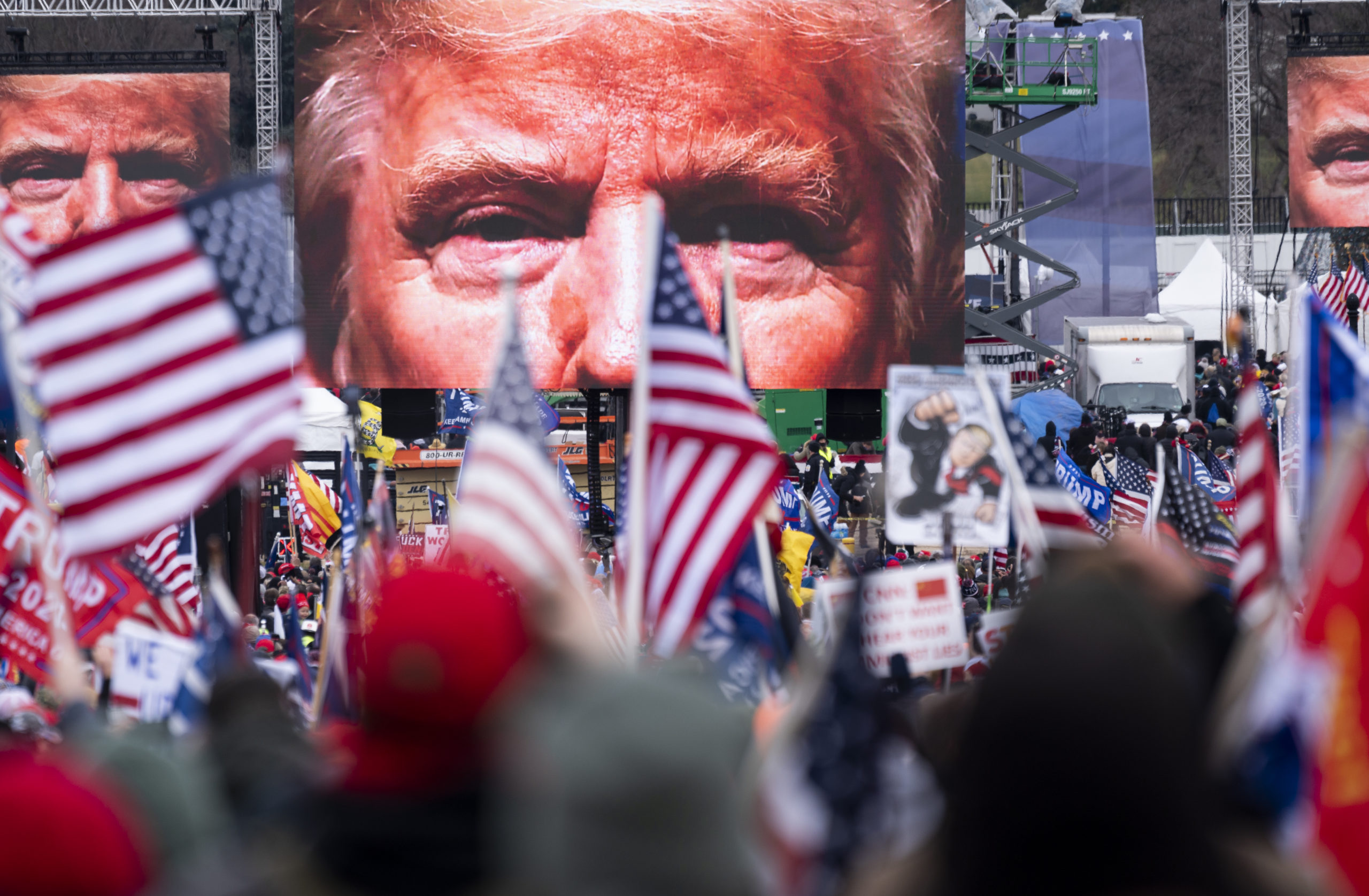

An appeals court unanimously ruled on Friday that Donald Trump can face civil lawsuits over claims that he incited violence on Jan. 6. The decision allows cases to proceed while permitting Trump to later reassert immunity defenses.
The D.C. Circuit Court of Appeals panel found that Trump’s actions before and during the Capitol insurrection were not eligible for the immunity protecting presidents from civil liability. However, the ruling allows Trump to argue later in the case that he was acting as president on Jan. 6, not as a private citizen.
The ruling is a victory for plaintiffs in three separate cases seeking to hold Trump civilly accountable for instigating a mob to storm the Capitol in an effort to block Joe Biden’s certification as the 2020 election winner.
“The Office of the Presidency as an institution is neutral about who will occupy it next. And campaigning to gain that office is not an official act of the office,” Chief Judge Sri Srinivasan of the D.C. Circuit wrote in the opinion.
The decision addresses three lawsuits brought by members of Congress, Capitol police officers, and others affected by the attack. In February 2022, U.S. District Judge Amit Mehta ruled that Trump’s claims of presidential immunity did not cover his conduct on Jan. 6, allowing the suits to move forward.
Trump appealed, arguing that his speech as president fell within the “outer perimeter” of immunity from civil suit. However, Srinivasan rejected that argument. The panel’s ruling only applies to civil questions at the initial stage of the suits and allows Trump to raise First Amendment concerns and litigate executive privilege claims later on.
Trump could still bring his claim of official act immunity in a motion for summary judgment once more evidence has been developed. Srinivasan suggested that evidence may help Trump’s case and pointed out that immunity is essential for a president to execute official duties without the fear of facing damages liability.
Srinivasan also raised a hypothetical situation akin to the structure of the 2024 election, where former President Trump is highly likely to be the GOP nominee against President Joe Biden. He noted that providing full civil immunity from defamation to current presidents but not to former presidents running against them would create an asymmetrical advantage.
“We see no basis for giving an incumbent President that kind of asymmetrical advantage when running against his predecessor,” Srinivasan concluded.
Leave a Comment